Beyond the Fantasy: The Real Scene for Bi Men Seeking MF Couples in the UK
Midnight blue light spills from countless screens across Britain. In darkened rooms from Clapham to Cardiff, fingers trace familiar paths across glass – swipe, tap, scroll. The endless feed flickers: torsos sculpted by gym lighting, carefully curated holiday snaps, bios oscillating between blunt demands and vague pronouncements of open-mindedness. Somewhere in this digital tide, lost between the instant hook-ups and the complex diagrams of established polycules, exists a specific current: the bisexual man casting out, searching for that elusive unit – the MF couple.
It’s a pursuit that feels distinctly of this moment, yet taps into something primal. A search tangled in the messy threads of identity, the fluid nature of attraction, and the ever-evolving architecture of relationships in the 21st-century UK. Let’s dispense with the clichés; this isn’t solely about chasing a fantasy ripped from the pages of Pornhub – although the visual stimulus undeniably plays its part in sparking curiosity for many. More often, it represents a deeper dive. It’s a way to align with the duality of one’s own desires, a curiosity about dynamics that deviate from the norm, perhaps even a hunt for a specific flavour of connection that feels absent in more conventional dating arenas.
But navigating this landscape is anything but straightforward. Finding a receptive, compatible couple isn’t like ordering Ocado. The platforms designed for connection – Feeld, with its focus on the non-monogamous and curious; Grindr, where couples often lurk amidst the sea of single profiles; dedicated swinging sites, albeit often couple-dominated; even the sprawling, anonymous forums of Reddit – form a chaotic, often exhausting marketplace. As the single bi guy, the perception can often be that you’re a readily available component, a ‘third’, a ‘plus one’, sometimes reduced to little more than a functional accessory. The irony stings: while bi women seeking couples are often fetishised as rare ‘unicorns’, bi men pursuing the same can feel lost in a saturated market, shouting into an echo chamber.
The grind is real. Hours bleed into scrolling, crafting opening messages engineered to strike that impossible balance: cool but not try-hard, interested but not intense, confident but not predatory. The digital silence that follows is deafening – ghosting is the default response ninety percent of the time. Then there are the picture collectors, harvesting validation without intent. And the couples – the ones whose profiles radiate adventurous harmony, yet who clearly haven’t had the crucial, potentially awkward conversation about what they actually want, or what happens if lines get blurred.
Matching is just the first hurdle. The initial dopamine hit of a connection – that curated profile promising shared exploration – frequently dissolves upon contact with the friction of actual human interaction. Chats circle endlessly, logistical planning dissolving into vague ‘maybes’. Couples who radiate enthusiasm online evaporate the moment a casual, low-stakes pub meet is suggested – the essential vibe check deferred indefinitely. Worse still are the interrogations, the feeling of being auditioned like a potential sex appliance, fielding invasive questions before basic pleasantries are exchanged.
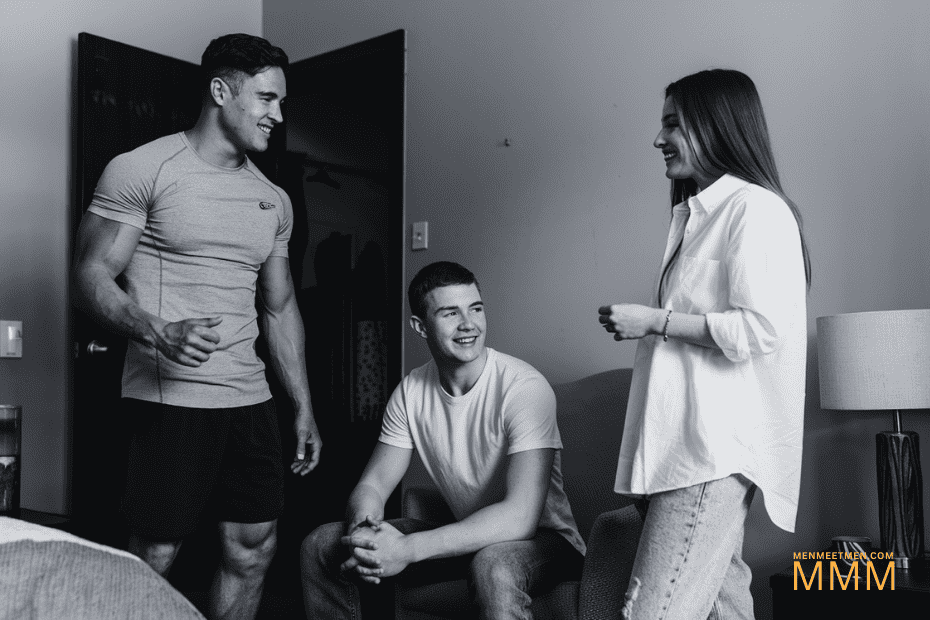
Power dynamics are inherent, inescapable. Entering the orbit of an established couple inevitably places the single individual in a position of less structural power. Their history, their home, their rules dictate the terms of engagement. Their comfort, their relationship’s perceived stability, takes precedence. While understandable, this can easily curdle into feeling like a disposable extra, easily ejected should discomfort arise or – perish the thought – unexpected feelings begin to complicate the neat arrangement. The stories filter through hushed conversations in bars or frustrated group chats: the excruciating first drink where one half of the couple dominates the conversation, oblivious, while the other assesses you with unnerving scrutiny, the entire encounter feeling less like a potential connection and more like a bizarre job interview you never applied for.
This isn’t purely a digital phenomenon, either. Some brave the physical realm, venturing into the specific territories of sex clubs, fetish nights, or queer events where fluidity is, in theory, celebrated. Yet, making a cold approach to a couple in these spaces demands significant social capital and an almost telepathic ability to read non-verbal cues. One misstep, one misinterpretation of an ambiguous glance, and you risk not just awkwardness but being branded a nuisance, a creep intruding on protected ground.
So, why bother? What keeps men tethered to the apps, enduring the digital static and occasional real-world rebuffs?
Part of the allure lies in transgression, the thrill of stepping outside tightly policed societal norms around monogamy and sexuality. For some, it’s about actively curating a sexual or relational experience that feels more congruent with their internal landscape. Being bisexual can sometimes feel like navigating a world demanding you pick a side. Engaging with a couple can offer a rare space where attraction to both a man and a woman isn’t just tolerated, but the entire point of the encounter. When the alchemy is right, when communication flows and desires align, the experience can be intensely validating, a powerful affirmation of one’s whole self.
Then there’s the specific energy of the MFM dynamic. It holds a unique fascination for many bi men – the interplay of masculine and feminine energies, the potential for shared focus, the exploration of different roles, be it dominance, submission, camaraderie, or simply a novel form of erotic expression. It’s a space where fantasies, often seeded by readily available porn narratives, can intersect with genuine curiosity about the multifaceted ways bodies, desires, and psychologies can connect.
But the chasm between fantasy and reality is wide, often littered with logistical and emotional debris. Communication, the supposed bedrock of ethical non-monogamy, is frequently the first thing to crumble. Couples may enter the search without a clear, unified understanding of their own boundaries, desires, or ‘what ifs’. Latent insecurities, jealousies, or simple social awkwardness can erupt without warning. The bi man can find himself unwillingly cast as negotiator, mediator, or even emotional sponge, trying to navigate the often-unspoken tensions simmering beneath the couple’s united front. You can sometimes feel like an unwitting therapist, observing the subtle cracks in their dynamic, the mismatched expectations – one seeking ongoing intimacy, the other a purely physical release – with you positioned precariously in the middle.
The digital platforms, designed for connection, often amplify the disconnect. Anonymity fosters a casual disregard; profiles become disposable commodities. Misrepresentation is rife – photos ten years out of date, bios strategically omitting crucial details, intentions veiled in ambiguity. The paradox of choice kicks in: the sheer volume of potential matches encourages endless swiping, the perpetual search for someone fractionally ‘better’, rather than investing the necessary time and vulnerability to cultivate a genuine connection.
Pay attention to the language. The call for a ‘third’, a ‘plus one’, ‘an extra for fun’. It inherently frames the single man as supplementary, an addition to enhance the couple’s existing narrative, rather than an equal participant embarking on a shared venture. This subtle linguistic framing can inadvertently reinforce a user dynamic, blurring the line between consensual exploration and outright objectification.
The UK context adds its own layers. That famed British reserve can clash spectacularly with the inherent vulnerability required for such intimate negotiations. Banter and irony, often deployed as social armour, can obscure genuine feelings or mask significant communication failures. Regional variations also play a part. London’s vast, anonymous sprawl offers quantity but perhaps dilutes accountability, creating a different hunting ground compared to the tighter-knit queer communities of Leeds, Manchester, Brighton, Glasgow, or Bristol, where reputation, for better or worse, can travel faster.

And what of the couples initiating the search? Their motivations are a spectrum. Many seek to inject novelty into long-term partnerships, explore latent bisexual curiosity (often, though not exclusively, the woman’s), or bring a shared, long-held fantasy to life. For others, it’s a conscious step towards polyamory or a pragmatic approach to managing differing needs or desires within the relationship.
However, the phenomenon often described as ‘unicorn hunting’ – typically couples seeking an elusive, drama-free bisexual woman to seamlessly integrate into their lives – has its parallel here. Couples might project unrealistic expectations onto the bi man they seek: attractive but not too attractive, confident but not challenging, discreet, disease-free, emotionally contained, and conveniently available yet easily dismissible. This checklist approach fundamentally misunderstands the unpredictable, often messy nature of human connection and desire. It sets the stage for disappointment on all sides.
Success in this realm requires more than just luck; it demands resilience. A robust capacity to absorb rejection, ghosting, and the sting of awkward encounters is practically a prerequisite. Crucially, it requires profound self-awareness – knowing your own desires, boundaries, and deal-breakers – and the courage to articulate them clearly, even when faced with the implicit pressure of a pre-existing dyad. Tempering high-flying fantasy with a grounded understanding of potential pitfalls is essential emotional PPE.
Patterns emerge. Red flags become easier to spot: the couple whose profile lacks individual photos, suggesting a potentially controlling dynamic; the bio composed entirely of demands; the immediate push for explicit photos or refusal to verify identity; the vague communication that signals low investment. A healthy cynicism develops, not out of bitterness, but as a necessary filtration system, conserving valuable emotional energy.
Yet, despite the static and the setbacks, genuine connections are forged. Moments occur when the complex variables align: mutual attraction, open communication, respected boundaries, shared intentions. The result might be a single, electrifying encounter that fulfils a specific desire for everyone involved. It could blossom into a recurring arrangement – an FWB dynamic built on trust and genuine affection. In rarer instances, it might even evolve into a more integrated structure, a triad or polycule where the ‘third’ is no longer an addition but a valued cornerstone. These positive experiences, however sporadic, serve as powerful reinforcement, tangible proof that the search isn’t entirely futile. They offer glimpses of possibility, validating complex desires and providing moments of authentic human connection in an increasingly mediated world. They underscore that the fantasy, while often elusive, isn’t pure fiction.
The scene itself is mutable. Apps rise and fall, societal dialogues around non-monogamy and bisexuality continue to shift (however glacially), and the vocabulary we use to articulate our relational and sexual selves expands. For the bisexual man in the UK seeking couples, the path remains intricate, a microcosm of broader shifts in dating, the influence of technology, and society’s ongoing renegotiation of intimacy and commitment.
It’s a navigation through a territory marked by potential objectification, mismatched expectations, and the ever-present risk of communication breakdown. Yet, it simultaneously offers a potent arena for self-discovery – a chance to explore the contours of one’s own identity, desire, and capacity for connection beyond established templates. It becomes less about finding the ‘perfect’ couple and more about understanding oneself through the process – clarifying wants, defining limits, and learning resilience.

The phone screen illuminates the face again. A new notification pings. Another potential connection, another roll of the dice. Hope flickers, tempered by experience. The search continues, not just for a specific configuration of bodies, but for resonance, for understanding, for a spark of something authentic in the complex, challenging, and occasionally rewarding landscape of modern British intimacy. It’s a gamble played out daily, a quiet testament to the persistent, intricate human drive to connect, in all its unconventional forms.